

17 Jul Planning a Commercial Development in NSW: Key Steps for Success
Commercial developments require careful planning, coordination and risk management to achieve successful outcomes. Whether you’re developing an office building, industrial facility, warehouse or retail asset, understanding the key stages of the process can help minimise delays, control costs and improve project certainty. Here are the essential steps every developer should consider when planning a commercial development in NSW.
Planning a Commercial Development – Start with a Feasibility Assessment
Before committing significant resources, it’s important to determine whether a project is financially and commercially viable. A feasibility assessment should consider:
- Site acquisition costs
- Market demand
- Construction costs
- Planning constraints
- Funding requirements
- Expected return on investment
Understanding these factors early helps identify potential challenges and supports informed decision-making throughout the project.
Understand Planning and Approval Requirements
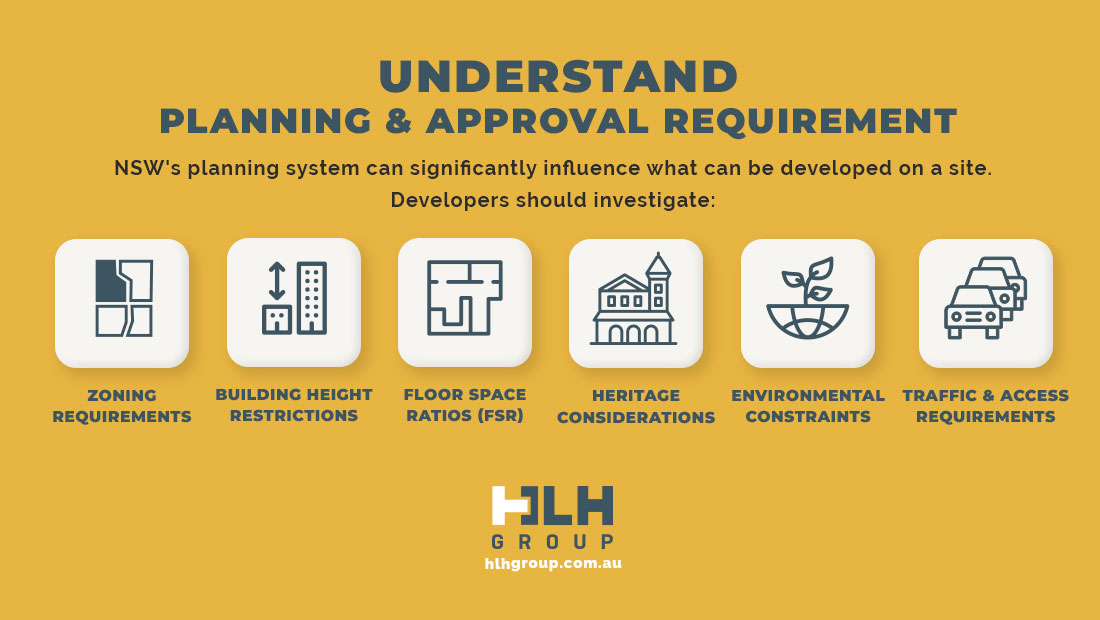
NSW’s planning system can significantly influence what can be developed on a site. Developers should investigate:
- Zoning requirements
- Building height restrictions
- Floor Space Ratios (FSR)
- Heritage considerations
- Environmental constraints
- Traffic and access requirements
Engaging planning consultants early can help streamline approvals and reduce the risk of costly redesigns later in the process. Depending on the project, approvals may include Development Applications (DA), Construction Certificates and Occupation Certificates.
Assemble the Right Project Team
Successful developments rely on experienced consultants and construction professionals working together from the outset. A typical project team may include:
- Architects
- Structural engineers
- Civil engineers
- Services consultants
- Quantity surveyors
- Project managers
- Construction contractors
Bringing the right expertise into the project early can improve planning, identify risks and support more efficient project delivery.
Develop a Realistic Budget for the Commercial Development
Accurate budgeting is critical to the success of any commercial development. A comprehensive budget should account for:
- Construction costs
- Consultant fees
- Authority charges
- Utility connections
- Planning contributions
- Financing costs
- Contingency allowances
With ongoing market pressures affecting labour and material costs, regular cost reviews throughout the design process are essential to maintaining project viability.
Focus on Buildability During Design
A well-designed project should also be practical and efficient to construct. Buildability considerations include:
- Construction sequencing
- Material selection
- Site access
- Procurement lead times
- Structural efficiency
Engaging construction expertise during design development can help identify opportunities to reduce costs, minimise programme risks and improve overall project outcomes. Many developers are increasingly adopting Early Contractor Involvement (ECI) models to gain valuable construction input before work begins on site.
Select the Right Procurement Strategy
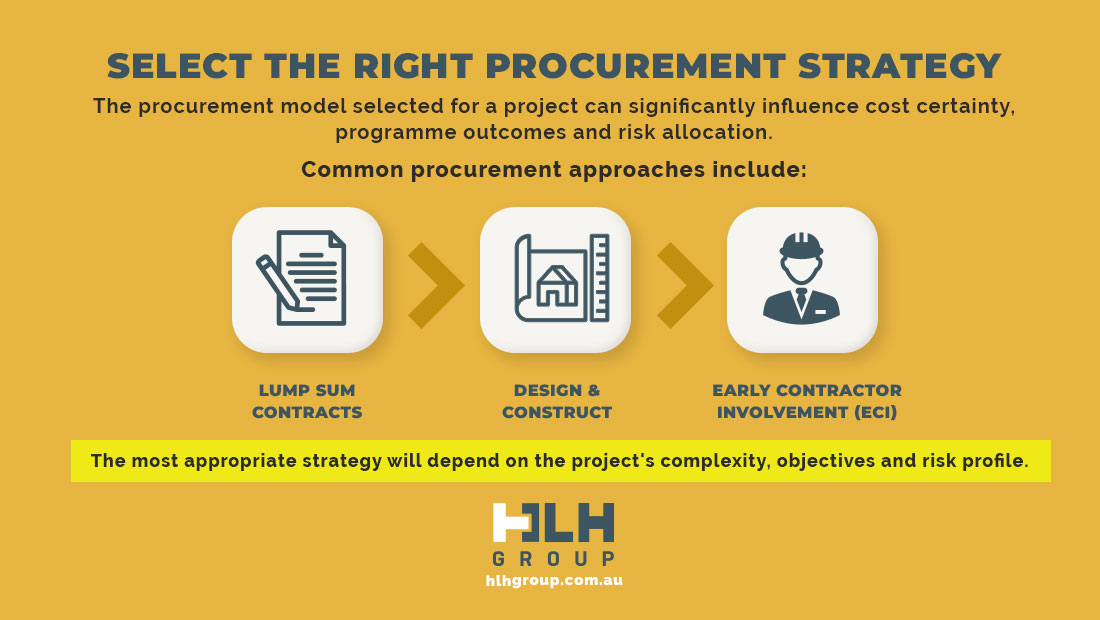
The procurement model selected for a project can significantly influence cost certainty, programme outcomes and risk allocation. Common procurement approaches include:
- Lump Sum Contracts: Suitable for projects with a fully developed design and clearly defined scope.
- Design and Construct: Provides a single point of responsibility for both design and construction.
- Early Contractor Involvement (ECI): Allows contractors to contribute practical construction expertise during the design phase before transitioning into delivery.
The most appropriate strategy will depend on the project’s complexity, objectives and risk profile.
Manage Construction Risks Proactively
Every commercial project carries risk, but early identification and planning can help minimise impacts. Common risks include:
- Cost escalation
- Labour shortages
- Supply chain delays
- Design changes
- Weather disruptions
- Approval delays
Developing a risk management plan and reviewing it regularly throughout the project can improve certainty and reduce potential disruptions.
Prioritise Programme Certainty
Time is often one of the most important drivers for commercial developments. Delays can affect tenant commitments, financing arrangements and project profitability. To improve programme certainty, developers should focus on:
- Detailed scheduling
- Procurement planning
- Early identification of critical path activities
- Regular stakeholder communication
Strong project management and proactive coordination are essential to keeping projects on track.
Final Thoughts on Planning Commercial Developments in NSW
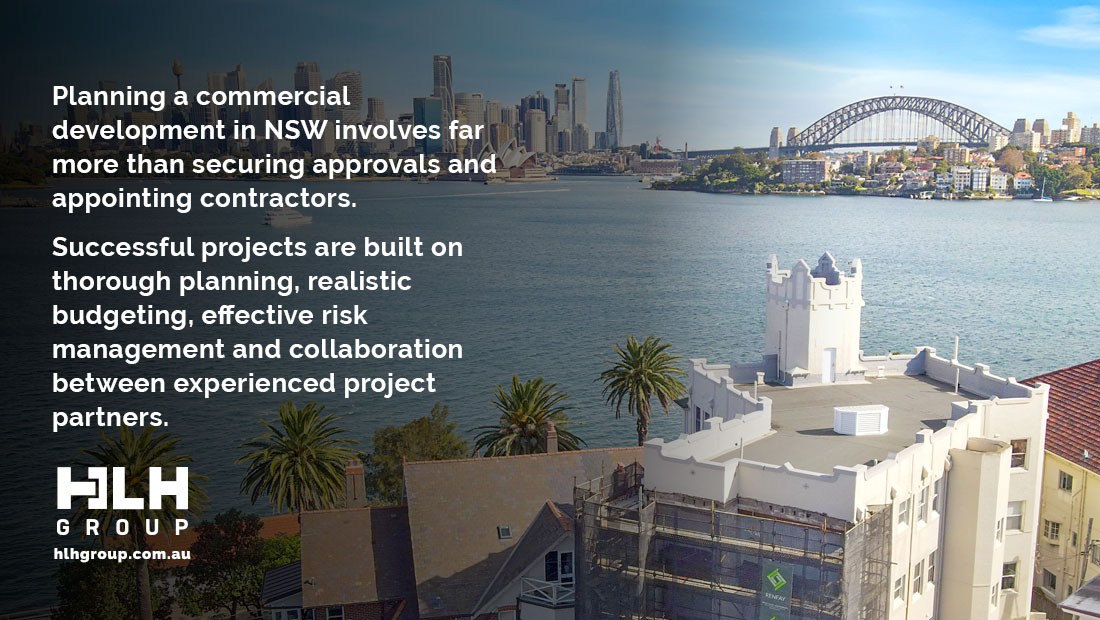
Planning a commercial development in NSW involves far more than securing approvals and appointing contractors. Successful projects are built on thorough planning, realistic budgeting, effective risk management and collaboration between experienced project partners. By investing in these early stages, developers can improve cost certainty, reduce risk and create a stronger foundation for successful project delivery.
Commercial Developments in NSW FAQ
- How long does a commercial development take in NSW? Timeframes vary depending on project size and complexity, but most commercial developments take between 18 months and several years from planning through to completion.
- What is the biggest risk in commercial construction? Cost escalation, programme delays and labour shortages remain some of the most significant challenges facing commercial developments.
- Should builders be involved during the design phase? In many cases, yes. Early contractor involvement can improve buildability, identify risks and help achieve greater cost and programme certainty.
- What procurement method is best for commercial developments? The right procurement model depends on the project’s scope, objectives and risk profile. Common approaches include lump sum, design and construct, and early contractor involvement models.
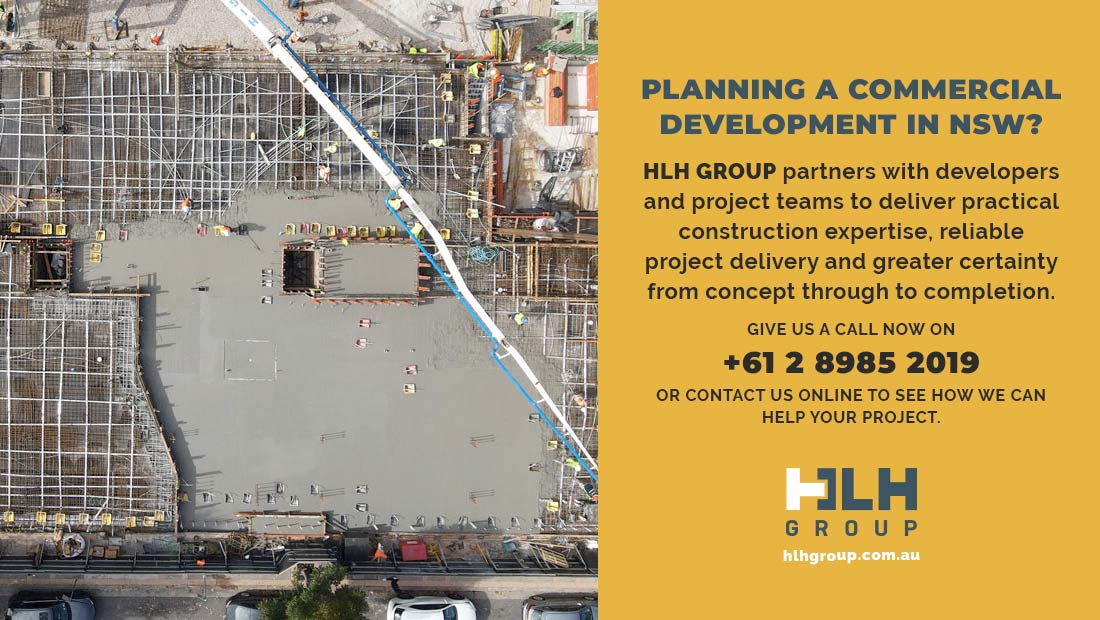
Planning a Commercial Development in NSW?
HLH Group partners with developers and project teams to deliver practical construction expertise, reliable project delivery and greater certainty from concept through to completion. Give us a call now on +61 2 8985 2019 or contact us online to see how we can help your project.



No Comments